Dancing Cats: Duet Meow
- 4.3
- Rating
- 5.00M
- Installs
- Free
- Price

 Analysis by App-foxy
The first thing I noticed about Dancing Cats: Duet Meow is that it understands its own mood immediately. This is a bright, playful music game built around dancing cats, electronic music, and short rhythm challenges rather than a serious attempt to simulate an instrument. I can pick it up when I want something light, get into a song quickly, and put it down without feeling that I have abandoned a long campaign.
That simple purpose is also the reason it works. The game does not ask me to learn a complicated control scheme before the fun begins. Its appeal comes from the combination of cute character presentation, energetic timing, and the small satisfaction of matching actions to a beat. I would recommend it most readily to players who enjoy casual rhythm games, animated music experiences, or something cheerful to play in short breaks.
It is free to download, aimed at Everyone, and comes from Sensor Notes Global. The game has been available since November 14, 2018, and its current version is 9.2. With an average rating of 4.3 from around 73 thousand ratings and more than 5 million installs, it has clearly found a sizeable audience without needing to be treated like a traditional premium music title.
You May Also Like

 Google Keep - Notes and lists
Google Keep’s Quiet Growth Shows the Appeal of Simpler Notes
As mobile work gets busier, Google Keep keeps winning a simple contest: capture a thought quickly, find it later, and get on with the day.

 Blood Strike: 2.5 Anniversary
Blood Strike’s Loadouts Turn Every Drop Into a Tactical Gamble
A close look at Blood Strike’s custom loadouts: how fast access to signature weapons reshapes its battle royale rhythm, rewards preparation, and narrows the gap between fights.

 Pandora - Music & Podcasts
Pandora’s Music Is Easy to Start, but Harder to Recover
Pandora’s strength is its low-effort path from a seed to a station. Its weak spot is how much confidence it asks you to place in connection, setup, and quiet recovery.

 8 Ball Pool
 Is Built on Rivalries, Rematches, and Routine
A close look at the rivalries, rematches, shared routines, and unanswered safety questions that turn a quick pool match into a persistent mobile community.

 Samsung Music
’s Quiet Strength Is Playing What You Already Own
Its reach comes less from spectacle than from dependable access to a personal library. That simplicity is both the app’s strongest retention engine and its ceiling.

 AccuWeather: Weather Radar
AccuWeather Review: A Quick, Clear Forecast for Everyday Decisions
For everyday plans, the best forecast is the one you can understand quickly. AccuWeather makes rain timing, radar, and local conditions easy to act on, with a few trade-offs.
More From Our News Desk



How the visual world sets the tone
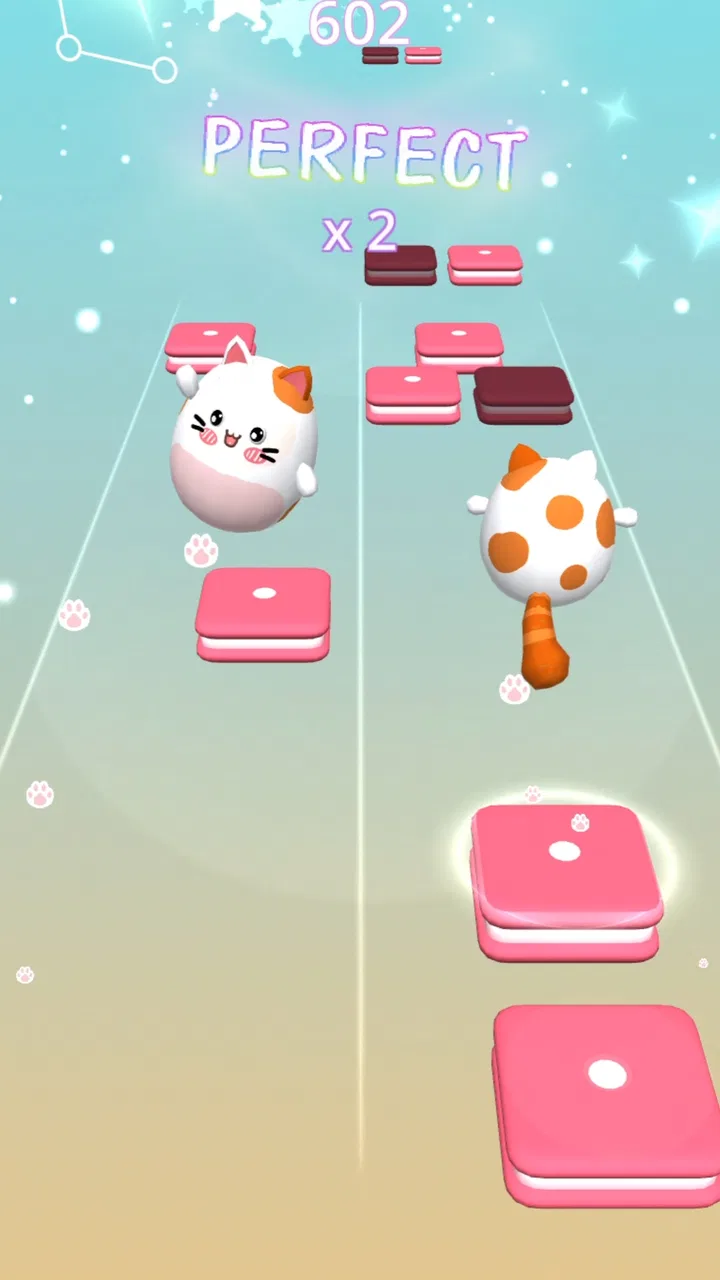
The art direction carries much of the personality. Cats are not just a decorative theme placed on top of a rhythm game; they establish the emotional language of the whole experience. Their dancing gives the songs a friendly, comic edge, so a missed input feels less harsh than it might in a darker or more competitive rhythm game. I find that useful when I am playing casually, because the presentation encourages another attempt instead of making every mistake feel like failure.
The setting is best understood as a compact performance space rather than a large world to explore. That focus keeps attention where it belongs: on the moving action and the musical pulse. The visual design appears to support recognition, with the cats and the beat working together as one readable scene. I do not need a detailed story to understand what I am meant to do. The cats perform, the music drives the moment, and my task is to stay in sync.
That clarity makes the game approachable for younger players and for anyone who normally avoids rhythm games because they look intimidating. The Everyone rating fits the gentle, colorful presentation. At the same time, players looking for a deep narrative, detailed character development, or a world with extensive exploration will probably find the setting too narrow. The charm is concentrated in the performance itself.
One practical benefit of this focused presentation is that it gives the game a clear use case on a phone. I can play while waiting for an appointment or during a short commute without needing to remember a complicated plot or rebuild a strategy from a previous session. The visual language tells me what kind of experience I am entering within seconds.
Why the cats matter beyond decoration
The cat theme softens the pressure that usually comes with timing games. In a more technical rhythm title, I may concentrate so hard on accuracy that the music becomes a test. Here, the animated performers keep the experience playful. I still want to improve my timing, but I am also watching a whimsical show unfold.
That balance is especially effective for families or mixed-skill groups. An experienced player can chase cleaner performances, while a beginner can enjoy the characters before mastering the rhythm. I would not confuse that accessibility with unlimited depth, though. Once the novelty of the dancing cats settles, the strength of the game depends on whether the available songs and challenges continue to hold my attention.
A useful way to approach it is to treat each session as a small performance rather than a long gaming commitment. I get more from the art direction when I stop expecting a conventional adventure and let the visual jokes, movement, and soundtrack provide the reward. That expectation makes a noticeable difference to whether the game feels charming or repetitive.
Sound, timing, and the playable mood
The EDM foundation gives the game a steady forward motion. Electronic music is a natural fit for a rhythm game because its beat is easy to follow, and the dancing cats turn that pulse into something visible. I find the strongest moments happen when the visual movement and the musical accents feel aligned. The result is not just a song playing behind a game; the song becomes the reason the scene moves.
This is where the title’s mood becomes coherent. The bright art invites a relaxed smile, while the electronic beat supplies enough energy to keep my attention. Neither side overwhelms the other. The cats prevent the soundtrack from feeling too mechanical, and the music stops the presentation from becoming merely a static cartoon.
For the best experience, I would play with a stable audio connection and keep the volume high enough to hear the beat clearly without relying only on visual cues. Rhythm games are easier to judge when my ears and eyes agree. If I am playing in a noisy room, I am more likely to react late, not because the controls are necessarily difficult, but because the musical guide has been weakened.
A small but important habit is to listen to a track for a few seconds before trying to play aggressively. I often do better when I first identify the regular pulse instead of staring only at the next prompt. That approach is useful for beginners, and it also reduces the temptation to tap randomly when the screen becomes busy. The game rewards attention to the song, not just fast fingers.
The sound design also affects how long I want to continue. A short, lively session can feel refreshing, particularly when I need a break from slower games. However, players who prefer a large catalog of recognizable songs, extensive remix options, or highly technical note patterns should keep their expectations measured. This is a mood-first rhythm experience, not a full music production tool or a specialist training platform.
Building a better everyday session
My favorite way to use it is as a ten-minute reset between tasks. I can play one or two rounds after finishing a piece of work, enjoy the upbeat atmosphere, and stop before the repetition becomes noticeable. That pacing suits the game better than treating it as a marathon. The cheerful setting feels fresh when I return in small doses.
I would also avoid judging the game from a single difficult attempt. Rhythm games can feel awkward during the first few minutes because the player is learning both the visual timing and the musical phrasing. Instead of immediately blaming the controls, I try a slower, more deliberate rhythm: watch the movement, hear the beat, then respond. This gives me a clearer sense of whether the challenge suits my reflexes.
Another useful trade-off is sound versus convenience. Playing silently may be more practical in public, but it removes one of the game’s strongest guides. If I must keep the sound off, I would choose a quieter setting and rely more carefully on the animation. The game remains playable as a visual activity, but the atmosphere loses some of its energy when the music is absent.
Where the mechanics fit the presentation
The mechanics make sense because they serve the performance theme rather than competing with it. I am not managing a large inventory, exploring a map, or building a complicated character. The central appeal is the immediate relationship between input, beat, and animated result. That makes the game easy to explain to someone else: watch the action, follow the rhythm, and try to keep the performance together.
This simplicity is a genuine strength on mobile. Touch controls are most successful when they do not interrupt the experience with unnecessary menus or complex gestures. I can focus on the timing instead of remembering a collection of commands. For a casual player, that lowers the entry barrier considerably.
There is a trade-off, though. Players who want a long progression system, deep customization, or competitive mastery may eventually feel that the core loop is too contained. A rhythm game can remain satisfying through precision alone, but it needs either especially compelling music or enough variety to keep repeated sessions feeling different. Here, the cats and the cheerful mood do a lot of the retention work.
I would describe the difficulty as approachable rather than effortless. The basic idea is clear, but keeping consistent timing still requires concentration. That is a good fit for a player who wants a gentle challenge, not for someone seeking the demanding precision of a specialist arcade rhythm game. If I want to relax, I can enjoy the presentation; if I want to improve, I can focus on cleaner responses and better musical awareness.
Who will enjoy it most
This game is a particularly good match for:
- Players who like cute character themes paired with electronic music.
- People who want short, self-contained mobile sessions.
- Beginners who find complex rhythm games intimidating.
- Families looking for a colorful game with an Everyone age rating.
- Players who enjoy improving timing without needing a large story or strategy system.
I would be more cautious about recommending it to someone who wants a serious music library, realistic instrument practice, or a long-form adventure. A dedicated rhythm title with denser patterns may be a better choice for expert players. A music-making application would also be more appropriate for someone who wants to compose, record, or control the sound directly. Dancing Cats: Duet Meow is about participating in a playful performance, not producing music.
It also may not suit players who dislike repetition. The focused structure is convenient, but it means the game’s appeal depends heavily on how much I enjoy replaying musical challenges with the same central visual identity. The cats give the loop character, yet they cannot replace variety forever for every player.
What the free model means in practice
The game is free, which makes it easy to try without committing money at the start. There are in-app purchases ranging from 49 cents to $3.49 per item. I would approach those purchases as optional convenience or additional enjoyment rather than assuming they are necessary to understand the core appeal. The important question for me is whether the free experience already provides enough time with the rhythm loop to decide if the style fits.
For younger players, I would still recommend that an adult review purchase settings before handing over the device. The Everyone rating describes the content, not how a household chooses to manage spending. That is a sensible precaution for any free mobile game with optional purchases.
The minimum operating system is Android 7.0, so compatibility should be checked before installing on an older device. On a supported phone, I would also close demanding background applications if the animation or timing feels inconsistent. Rhythm games depend on responsiveness, and a crowded device can make any timing-based experience feel less precise than it should.
The current version, 9.2, suggests that this is not an abandoned one-off release. Still, I judge it by what it offers in the moment: a compact, colorful rhythm game with a clear identity. I would not install it expecting the breadth of a major console music game. I would install it because the combination of cats, EDM, and quick touch-based play sounds like an enjoyable way to fill a short break.
My final mood check
After spending time with it, I see Dancing Cats: Duet Meow as a game that succeeds by keeping its artistic choices aligned. The cats create a friendly visual voice, the electronic soundtrack supplies movement, and the rhythm mechanics give both elements a purpose. Nothing needs to be overly serious for the experience to feel complete. Its best quality is that it knows exactly what kind of small, upbeat moment it wants to create.
My main reservation is the same quality that makes it accessible: the focused design may not offer enough depth for players who need constant novelty or demanding technical play. I also would not choose it as a substitute for music education, composition software, or a large-scale rhythm catalog. Those are different needs, and another type of app would serve them better.
For everyone else, the decision is fairly simple. If I want a friendly rhythm game that can brighten a short pause, this is an easy one to try. I especially like it for casual sessions where I can listen, react, and enjoy the animated performance without managing a complicated game world. Its strongest feature is the harmony between mood and mechanics: the presentation is not just cute, and the rhythm is not just functional. Together, they make a light game that feels deliberately shaped rather than randomly decorated.
I would recommend it to a friend who enjoys playful mobile games and does not mind returning to a compact loop. I would suggest skipping it only when the goal is serious musical practice, deep progression, or demanding competitive rhythm play. For a cheerful EDM session with dancing cats, though, it delivers a clear and pleasant experience at no upfront cost.
FAQs for Dancing Cats: Duet Meow
01What is Dancing Cats: Duet Meow?
Dancing Cats: Duet Meow is a casual rhythm game in which you guide animated cats through musical levels by tapping, swiping, or following on-screen prompts. The game combines catchy songs, colorful visuals, and playful cat characters to create a lighthearted experience. It is designed to be easy to start, although later stages may require faster reactions and more accurate timing.
02How do you play Dancing Cats: Duet Meow?
Gameplay focuses on matching your actions to the rhythm of the selected song. As notes, obstacles, or movement cues appear, you must respond at the right moment to keep the cats dancing and maintain your score. Successful actions usually build combos and improve your performance, while missed inputs can reduce accuracy. The controls are simple, but mastering difficult songs takes practice.
03Is Dancing Cats: Duet Meow free to download and play?
Dancing Cats: Duet Meow can generally be downloaded without an upfront purchase, but the free experience may include optional in-app purchases, advertisements, or both. These extras can be used to unlock content, obtain bonuses, or customize the experience more quickly. Before downloading, it is worth checking the store listing for the current pricing, subscription details, and supported payment options.
04Does Dancing Cats: Duet Meow require an internet connection?
Some parts of Dancing Cats: Duet Meow may work offline, especially basic gameplay that has already been downloaded, but an internet connection can be needed for advertisements, updates, new songs, cloud features, events, or purchases. Availability may vary depending on the device and version. If you plan to play while traveling, test the game offline first rather than assuming every feature will be available.
05Is Dancing Cats: Duet Meow suitable for children?
The game’s cheerful cat theme, simple controls, and music-focused gameplay make it approachable for younger players, but parents should still review the app’s age rating and store information. Advertisements, in-app purchases, external links, or online features may be present depending on the version. For children, parental controls and purchase restrictions are recommended, particularly if the device uses a shared payment account.
Pros
- Simple rhythm gameplay that is easy for beginners to understand.
- Cute cat animations make each performance entertaining to watch.
- Short song levels fit well into quick gaming sessions.
- Duet mechanics add variety compared with standard rhythm games.
- Lighthearted presentation makes it suitable for casual players.
Cons
- Timing can feel demanding on faster songs or difficult sections.
- Repeated attempts may become monotonous after extended play.
- Some content may require progress or purchases to unlock.
- Visual effects can occasionally distract from the rhythm cues.
- The game may use noticeable storage and battery during longer sessions.

Dancing Cats: Duet Meow
Gallery